Thousands of AI tools. Almost all of them free.
Because nobody could charge an agent per call.
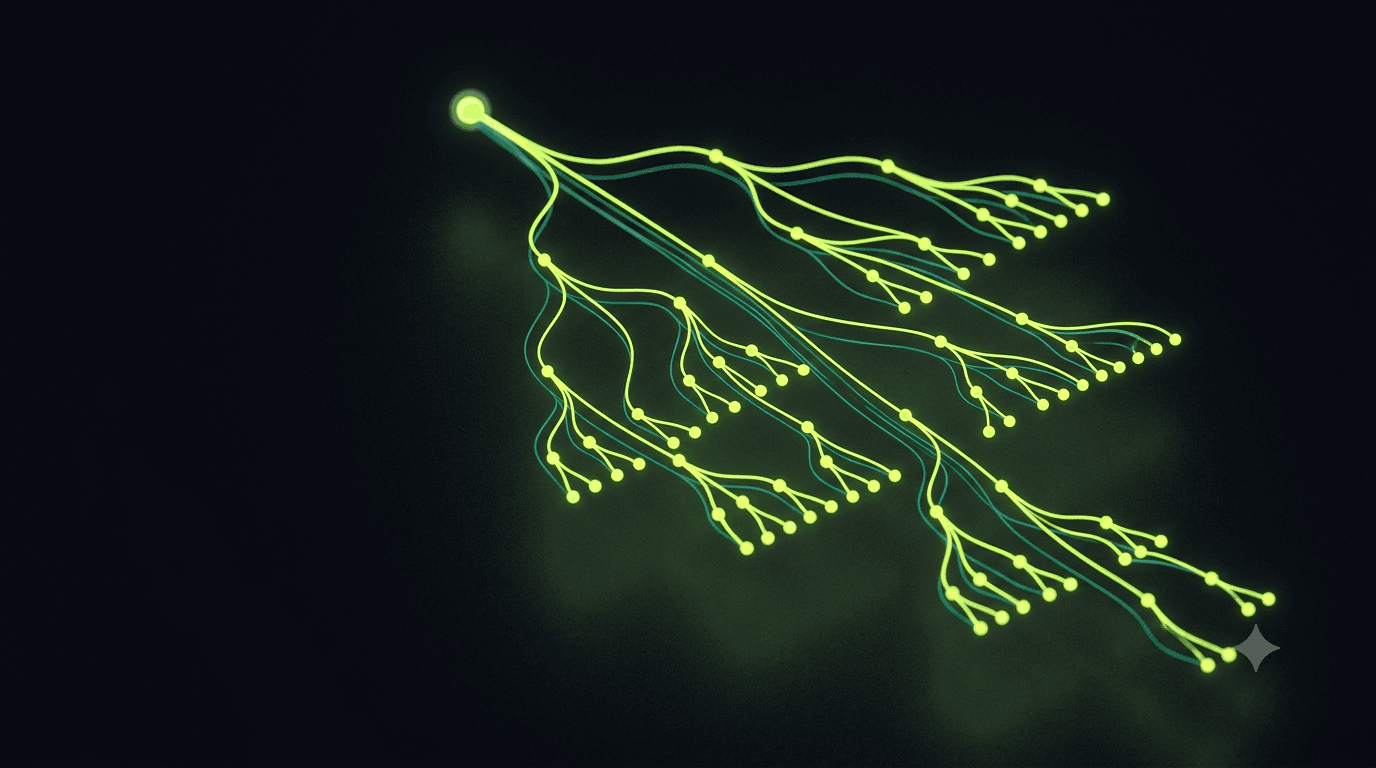
Payments that cascade.
CasCet is the monetization layer for MCP on Casper, the Stripe for MCP servers. Charge AI agents per tool call over x402, and settle the multi-hop payment chains no one else does, on-chain and in seconds.
- mainnet
- live + security-audited
- x402
- real settlement, no mock
- N-hop
- cascading payments
- 1
- autonomous LLM buyer
How it works
From free tool to paid, composable service
Wrap
cascet wrapPut a paywall in front of any MCP server. Price each tool; agents pay per call in CEP-18 over x402. Your tool code stays untouched.
Get started
Three ways in
Pick your role. Every command is copy-paste ready.
You have an MCP server. Put a paywall in front of it and price each tool. Agents pay per call in CEP-18 over x402; your tool code stays untouched.
Generate your confignpx @cascet/cli init # writes cascet.config.json# edit it: payTo (your Casper account), per-tool prices, facilitatornpx @cascet/cli wrap # your server is now paidBudget-bounded cascades with recursive attribution
The headline isn't “agents pay per call”. It's a machine-to-machine primitive that only makes sense once payments compose into trees. The CascadeController contract turns a cascade into a programmable supply chain.
On-chain budget tree
An agent opens a cascade with one deposit that caps the whole call tree. The contract pays each hop out of it and refuses any hop that would exceed the budget. Enforcement by construction, not by trusting the gateway.
Recursive attribution
A configurable share of a child hop's earnings flows up to the parent hop's payee, so the composing service earns margin on what it resells. The payment graph is the revenue-sharing graph.
✓ proven on Casper mainnet: open(100) → root pays analyst 40 → child pays data 20 with 20% attribution (data +16, analyst +4 up the tree) → an over-budget hop is rejected on-chain (BudgetExceeded) → close refunds the unspent 40. Every step is a real transaction on cspr.live.
Try it in the playgroundBuilt end-to-end
Not a demo, a working machine-money stack
Real x402 settlement, no mock
Agents pay from an on-chain balance of a real transfer_with_authorization CEP-18 token; a self-hosted x402 facilitator verifies and settles it; receipts anchor on-chain. Every hop is a real Casper transaction.
Receipts, on-chain
Every settled call is anchored with its cascade parent id, so the whole payment graph reconstructs from chain data alone, no central coordinator.
Upgradable contracts
The ReceiptRegistry was upgraded v1.1 to v1.2 in-place on Casper, and all anchored state survived the upgrade.
Revenue splits
Point a server's payTo at the RevenueSplit contract and earnings split between co-authors on-chain, pull-based.
Wrap any MCP server
CasCet monetizes the unmodified official server-everything, not just first-party tools.
One tool call, paid over HTTP 402
MCP speaks JSON-RPC over one endpoint, so the gateway maps each priced tool to an x402 route. The agent's wallet signs a CEP-18 authorization and retries, and the gateway only charges if the tool succeeds. A failed call is never billed.
# 1. agent calls a priced tool
POST /mcp tools/call get_rwa_price

← 402 Payment Required
  price: $0.02 · asset: CEP-18 · network: casper-test

# 2. wallet signs transfer_with_authorization, retries
POST /mcp PAYMENT-SIGNATURE 0x…

→ 200 OK  x-cascet-payment-id: 21e0be7a…
  { "asset": "gold", "priceUsd": 4095.83 }

✓ settled on Casper · receipt anchored on-chain
The autonomous buyer
An LLM that prices, budgets, and buys tools on its own
The seller side turns MCP tools into paid services. The buyer makes that economy self-driving: given a DeFi/RWA goal, Claude reads the tools' prices straight from tools/list and:
- discovers the paid tools + their x402 prices
- decides which to buy for a DeFi/RWA goal
- pays per call under a fixed on-chain budget
- cites the data it purchased in a recommendation
How it runs: the free live demo drives real Claude on your Max/Pro plan via cascet connect (no paid API key), and tool discovery, x402 pricing, payments, budget enforcement and settlement are all real on-chain.
🧠 buy get_cspr_market_data ($0.01)
💸 x402 · ✅ paid
🧠 buy get_defi_yields ($0.02)
💸 x402 · ✅ paid
🧠 buy get_rwa_price gold + treasury
💸 x402 ×2 · ✅ paid
→ keep ~55% stCSPR liquid staking (9.9% APY, liquid), rotate ~30% into tokenized treasuries, ~15% gold hedge.
✓ 4 tools bought under budget · grounded in real data
On-chain layer
Six contracts, live on Casper mainnet
real x402 settlement on mainnet · 2c66141c… · cascade primitive proven on mainnet · 999396c4…
Where this goes
A real project with a long-term plan
The primitive, proven on-chain
- 5 Odra contracts; real x402 settlement, no mock.
- CascadeController: budget-bounded cascades + recursive attribution.
- Autonomous LLM buyer, live dashboard, cascade playground, and a proposed x402-MCP spec.
- CLI + libraries published on npm: npx @cascet/cli.
Live on Casper mainnet, end-to-end
- Full contract set live on Casper mainnet; real x402 settled from both the TypeScript and Python clients.
- The CascadeController primitive proven on mainnet: budget cap, attribution up the tree, over-budget revert, and refund.
- Pre-mainnet adversarial security review — findings fixed and redeployed.
- On-chain-backed dashboard + explorer (rebuilt from the ReceiptRegistry), a /build config wizard, and a wallet-signed RevenueSplit withdraw.
Monetization & control plane
- A protocol take-rate on settled volume: the business model.
- Hosted CasCet control plane: register a server, get a paid endpoint + dashboard in one step.
- Per-second / streaming price schemes and a public metrics API.
The trust layer for the agent economy
- An agent-facing pricing-discovery API and a Bazaar marketplace of paid MCP tools.
- On-chain reputation for tools and agents; cross-chain settlement.
- CasCet as default rails for machine-to-machine commerce.
FAQ
Questions, answered
The trust layer for the agent economy
Machine-to-machine commerce needs payments that compose. CasCet ships that primitive first, on Casper.